
Automotive seat design forms the cornerstone of every vehicle. Think about it: where does true car design begin? It starts not with the wheels or the engine, but with the human body. Specifically, the driver’s posture provides the fundamental blueprint for everything else. This critical interface governs daily comfort and collision survival, blending ergonomics, material science, and safety engineering into a single, vital component.
The Cornerstone of Design: How Posture Defines Automotive Seats
Automotive seat design first establishes an optimal posture, which in turn defines the vehicle’s character. For example, an SUV uses an elevated, upright position to enhance the driver’s command and visibility. Conversely, a sedan employs a lower, reclined stance to prioritize comfort and sportiness. Meanwhile, a race car needs a near-horizontal seat to lower the center of gravity and boost aerodynamic efficiency.
This initial posture decision triggers a cascade of design choices. It directly shapes the seat’s contours, adjustability, and structure. Furthermore, it creates the three-dimensional coordinate system for the entire cockpit, fixing the positions of the steering wheel, pedals, and all primary controls.
Ergonomic Engineering: The Science Behind the Perfect Seat Fit
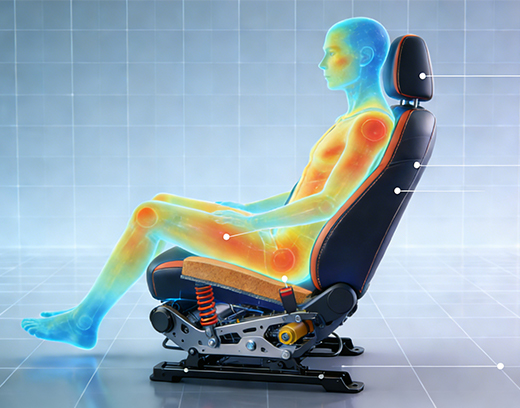
Modern automotive seat design applies precise anthropometric data and spinal biomechanics. Its goal is to support the spine’s natural double-S curve, which promotes a neutral pelvic and spinal alignment. Consequently, this design significantly reduces muscle fatigue and long-term strain.
Zone-Specific Support: Lumbar, Thoracic, and Pelvic Cradling
Engineers achieve this through targeted support in three key zones:
- Lumbar Reinforcement: The design must firmly support the lower spine to maintain its natural curve and prevent slouching. Most systems now offer adjustable support here.
- Thoracic Contouring: The seatback contours gently embrace the mid-to-upper back, matching the spine’s outward curve without creating pressure points.
- Pelvic Cradling: The seat cushion distributes weight evenly under the sitting bones and prevents the occupant from sliding forward.
Beyond Comfort: The Dual Mandate of Seat Safety and Dynamic Performance
A premium automotive seat must perform under both static and extreme dynamic conditions.
- For Daily Ergonomics: The seat manages vibrations and provides sustained comfort for long journeys, ensuring optimal weight distribution to minimize fatigue.
- For Dynamic & Safety Performance: During aggressive maneuvers, integrated lateral bolsters hold the driver securely in place. More importantly, in a collision, the seat structure becomes a critical safety cell. It works with seatbelts and airbags to manage crash energy and keep the occupant in a safe position.
Innovation in Materials and The Challenge of Technology Integration
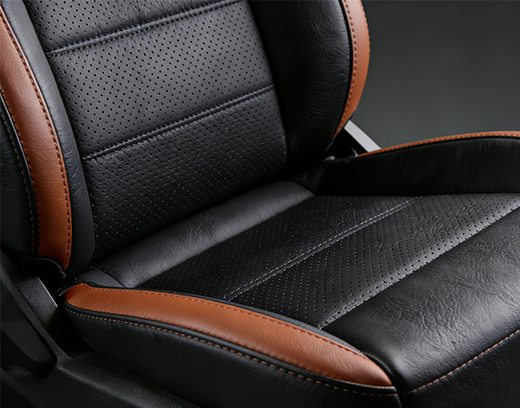
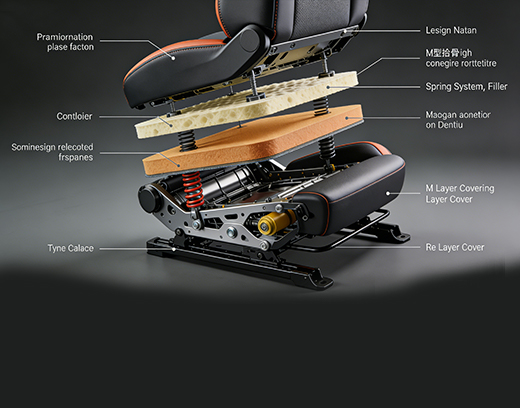
The materials in automotive seats have evolved dramatically. Engineers have moved past the bulky coil springs of the past. Today, they use sophisticated hybrid systems that combine comfort-optimized cone coils with space-efficient sinuous springs. These systems rely on high-resilience foam that maintains its shape over millions of compressions.
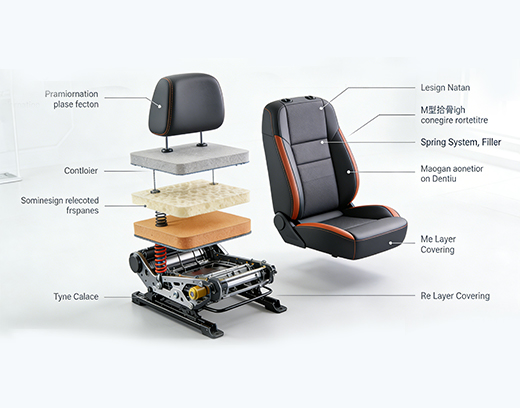
However, integrating technology presents a major challenge. A modern seat packs a dense array of components—adjustment motors, ventilation fans, heating elements—into a minimal space. Designers must accomplish this integration without compromising the essential safety margins or comfort layers.
Conclusion: Why Automotive Seat Design is the Foundation of the Driving Experience
In summary, automotive seat design is far more than simple furniture. It represents a complex synthesis of engineering disciplines where human physiology meets crash physics. Ultimately, it serves as the ergonomic anchor, safety-critical structure, and technological hub that defines the foundation of the driving experience.